

How to Organize Wardrobe for a Stylish and Clutter-Free Space
Over 60 percent of people say their closets are a source of daily stress and frustration. A tangled collection of clothing and accessories can make mornings feel chaotic and rob you of precious time. With the right strategies, transforming your wardrobe into an organized, inviting space is easier than you might think. This guide offers clear, practical steps to help you regain control, making it simple to find what you need and enjoy a clutter free closet every day.
Table of Contents
- Step 1: Prepare Your Space And Gather Storage Essentials
- Step 2: Sort Clothing And Accessories By Type And Usage
- Step 3: Declutter And Decide What To Keep Or Donate
- Step 4: Arrange Items For Easy Access And Visual Appeal
- Step 5: Maintain And Refresh Your Wardrobe Regularly
Quick Summary
| Key Point | Explanation |
|---|---|
| 1. Empty Your Closet Completely | Start by removing all items to assess what you own and create a clear space for reorganization. |
| 2. Sort Items by Category | Organize clothing into distinct piles based on type and usage for better visibility and functionality. |
| 3. Declutter Ruthlessly | Evaluate each item critically, deciding to keep, donate, or discard based on wear frequency and fit. |
| 4. Use Smart Storage Solutions | Implement color coding and effective storage tools to make items easily accessible and visually appealing. |
| 5. Maintain Regularly | Conduct seasonal reviews of your wardrobe to remove items that no longer fit or suit your style. |
Step 1: Prepare Your Space and Gather Storage Essentials
Organizing your wardrobe starts with creating a strategic foundation for success. This step is all about clearing out your space and collecting the right tools to transform your closet from chaotic to carefully curated. According to Archeworks, smart storage solutions like wire shelf dividers and multi-use hangers can dramatically maximize your available space.
Begin by completely emptying your current closet or storage area. Take everything out items by category: clothing, accessories, shoes. This allows you to see exactly what you own and create a blank canvas for reorganization. Grab some essential organizational tools before you start sorting including:
- Sturdy storage bins
- Shelf dividers
- Matching hangers
- Clear plastic containers
- Label maker (optional but helpful)
As Common Good Ventures notes, well-designed storage is crucial for creating an efficient living space. Pro tip: choose storage solutions that are both functional and visually appealing. White or neutral colored bins tend to create a clean uniform look that makes your space feel more organized and intentional.
Once you have your supplies ready, you are set to move to the next stage of wardrobe transformation. The groundwork you are laying now will make the entire organizing process smoother and more enjoyable.
Step 2: Sort Clothing and Accessories by Type and Usage
Now that you have cleared out your space, it is time to create a systematic approach to sorting your clothing and accessories. According to ClassX, effective wardrobe organization involves sorting items by category and creating a logical system that makes sense for your lifestyle.
Start by creating distinct sorting piles for different clothing types. Separate your items into clear categories like:
- Work attire
- Casual wear
- Athletic clothing
- Formal wear
- Seasonal items
- Accessories
OIB-TAC recommends taking inventory during this process and removing items you have not worn in the past year. This helps streamline your wardrobe and create more space for pieces you actually use.
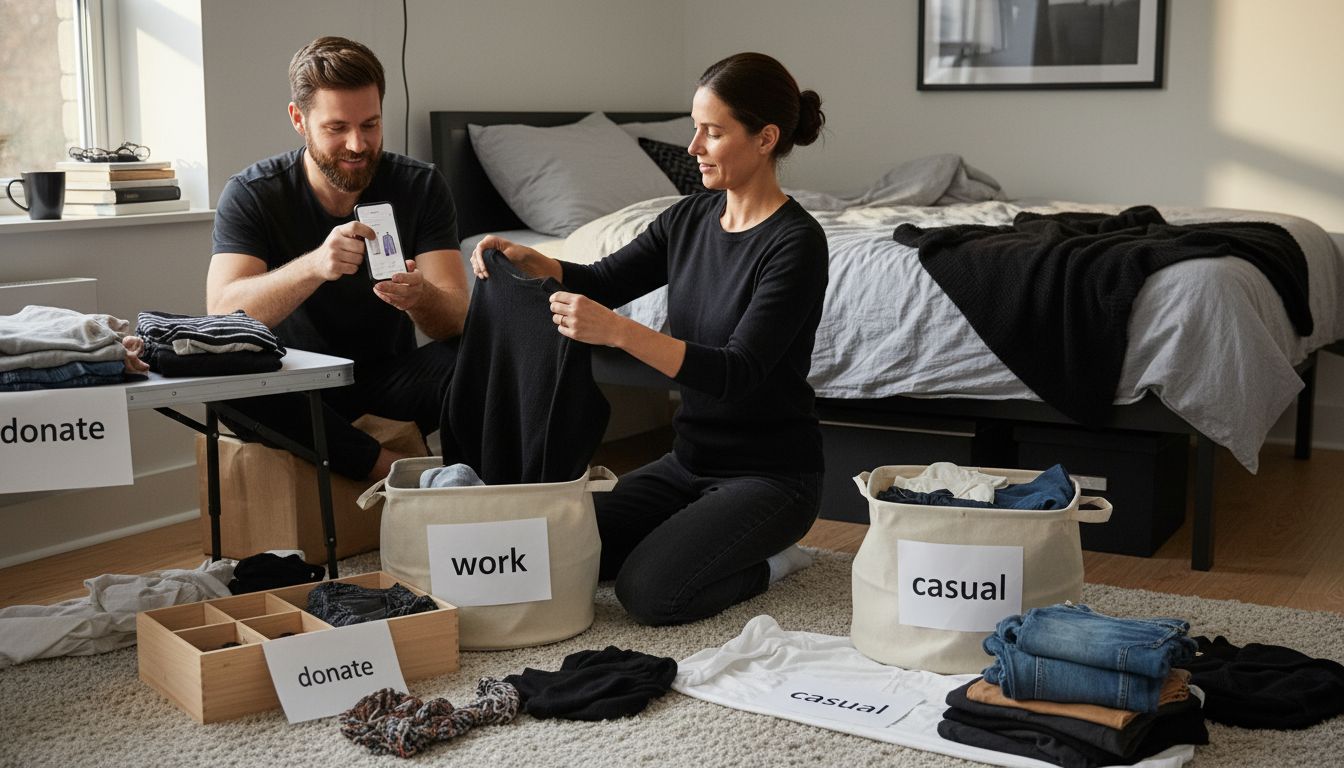 Pro tip: as you sort, ask yourself two questions about each item what is its primary purpose and how often do you actually wear it.
Pro tip: Consider your lifestyle when organizing. Create subcategories that make sense for your daily routine. For someone who works in a professional setting this might mean separating business formal from business casual. For a fitness enthusiast this could mean organizing workout gear by activity type like running yoga or weightlifting.
With your clothing now strategically sorted you are ready to move on to the next phase of creating an organized and functional wardrobe that reflects your personal style and meets your practical needs.
Step 3: Declutter and Decide What to Keep or Donate
The decluttering process is your opportunity to create a wardrobe that truly reflects your current lifestyle and personal style. According to Smith College, a strategic wardrobe edit can help you cut clutter and create a closet full of clothes that make you look and feel your best.
Create three primary sorting piles: keep, donate, and discard. As you evaluate each item ask yourself critical questions like: When was the last time I wore this? Does it fit me perfectly right now? Does it make me feel confident? Is it damaged beyond repair? Be ruthlessly honest with yourself about each piece. Research from Agris suggests that reflective garment decluttering can significantly impact long-term clothing consumption habits and help you develop a more intentional wardrobe.
For clothing in the donate pile consider the condition of the items. Pieces should be clean gently used and appropriate for donation. Locate local charities shelters or clothing banks that accept wardrobe donations. Some organizations even provide tax receipts for your contributions. Pro tip: if you have not worn an item in the past year it is likely a strong candidate for donation.
With your wardrobe now streamlined you are ready to organize the pieces you have chosen to keep and create a functional closet that simplifies your daily routine.
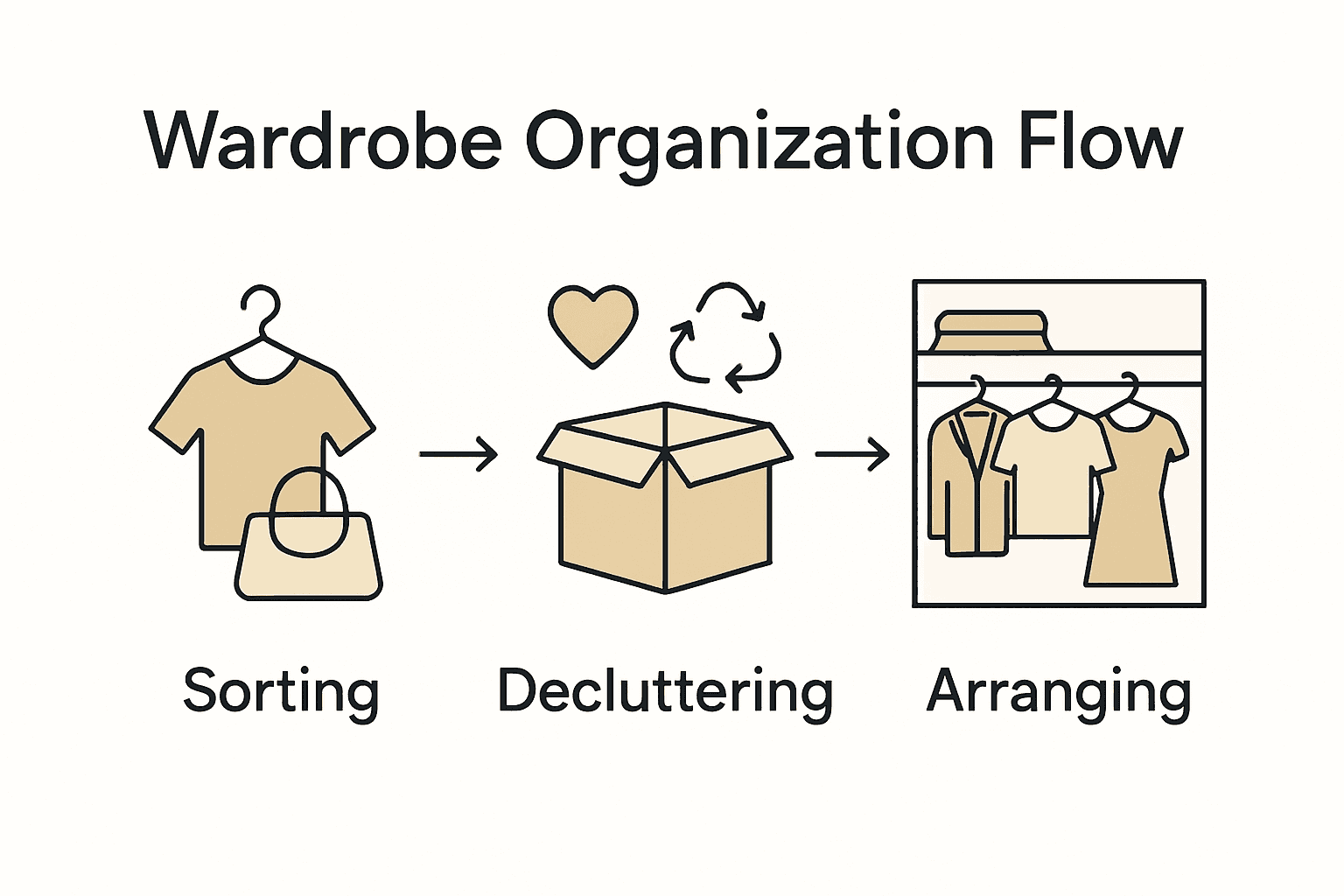
Step 4: Arrange Items for Easy Access and Visual Appeal
Now comes the exciting part of transforming your wardrobe into a functional and visually pleasing space. Archeworks recommends using smart storage solutions like wire shelf dividers and multi-use hangers to enhance both accessibility and visual organization of your clothing items.
Start by implementing a color coded organization system. According to ClassX, arranging clothes by color creates an aesthetically pleasing visual flow and makes finding specific items much easier. Begin with lighter colors and gradually transition to darker shades within each clothing category. Hang similar items together work shirts with work shirts casual tops with casual tops and so on. For folded items use drawer dividers to maintain neat compartments and prevent items from becoming jumbled.
Pro tip: Consider the frequency of use when arranging your wardrobe. Place everyday items at eye level and within easy reach. Seasonal or special occasion clothing can be stored on higher shelves or in less accessible areas. Use clear storage containers or labeled boxes for items you do not need immediate access to ensuring they remain protected and dust free. By creating a system that is both visually appealing and practical you will make getting dressed a more enjoyable and efficient experience.
With your wardrobe now beautifully organized you are ready to maintain this system and enjoy a clutter free closet that reflects your personal style and makes getting dressed a breeze.
Step 5: Maintain and Refresh Your Wardrobe Regularly
Keeping your newly organized wardrobe in top shape requires consistent effort and mindful practices. Smith College recommends conducting regular wardrobe edits to ensure your closet remains a curated collection of items that make you look and feel your absolute best.
Set a seasonal rhythm for wardrobe maintenance. Every three to four months take time to reassess your clothing collection. Remove items that no longer fit or suit your current style. Research from Agris suggests that reflective decluttering can help reduce unnecessary clothing acquisition and promote more intentional consumption habits. During these reviews ask yourself key questions: Have I worn this in the past season? Does it still align with my personal style? Is it in good condition?
Pro tip: Create a simple maintenance routine. Invest in quality hangers to preserve clothing shape. Use garment bags for delicate or seasonal items. Implement a one in one out rule to prevent future clutter. Learn more about travel wardrobe essentials to help you make strategic additions to your closet. By dedicating just a few hours each season to your wardrobe you can maintain an organized efficient and stylish clothing collection that adapts with you.
Transform Your Cluttered Closet into a Stylish Haven Today
Feeling overwhelmed by a closet that just won’t cooperate even after sorting and decluttering? You are not alone. Many people struggle with making their wardrobe both functional and visually appealing while keeping it clutter-free. This guide showed how important it is to have smart storage solutions and easy access to the clothes you love wearing. The key pain points include overcoming clutter, finding the right storage essentials, and maintaining wardrobe harmony over time.

Now is the perfect moment to upgrade your space with curated products designed to organize your wardrobe effortlessly. Explore collections of sleek storage bins, matching hangers, and stylish organizers at Trenzora.com where finding trendy and practical solutions is simple. Don’t wait for clutter to take over again. Visit Trenzora to discover how a few smart additions can completely transform your daily routine and keep your closet looking great season after season. Start your stylish, clutter-free journey now!
Frequently Asked Questions
How can I effectively prepare my wardrobe space for organizing?
To prepare your wardrobe space, start by completely emptying your closet to see all your items clearly. Gather essential storage tools like sturdy bins and matching hangers to set a strong foundation for your organization effort.
What is the best way to sort my clothing and accessories?
Sort your clothing and accessories by type and usage. Create distinct piles for categories such as work attire, casual wear, and activewear to establish a logical system that reflects your lifestyle.
How do I decide what to keep, donate, or discard from my wardrobe?
Use a three-pile method: keep, donate, and discard. Ask yourself if you’ve worn an item in the last year or if it makes you feel confident, and be honest to help you create a clutter-free collection.
What is the key to arranging items in my closet for visual appeal?
Arrange your items in a color-coded system for visual appeal and easier access. Start with lighter colors at one end and progress to darker shades, aligning similar items together, like casual tops with casual tops.
How often should I maintain and refresh my organized wardrobe?
Conduct a wardrobe maintenance check every three to four months. During this time, reassess your items to ensure they align with your current style and remove anything that no longer fits or suits you.
What routine can I implement to keep my wardrobe organized?
Create a simple maintenance routine by using quality hangers to preserve clothing shape and implementing a one-in, one-out rule to manage new additions. Spend just a few hours each season to keep your wardrobe organized and clutter-free.
